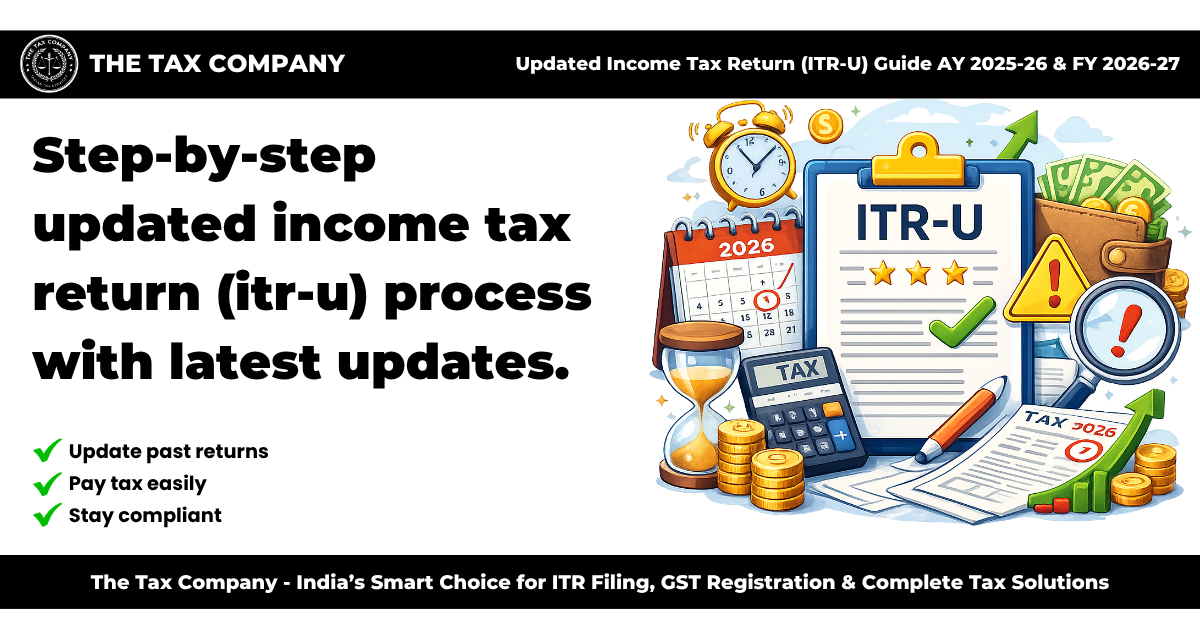
Updated Income Tax Return (ITR-U) Guide AY 2025-26 & FY 2026-27
Introduction
The Updated Income Tax Return (ITR-U) is a facility introduced to allow taxpayers to voluntarily correct errors or omissions in their previously filed returns, even after the deadlines for belated or revised returns have passed.
For Assessment Year (AY) 2025-26 and Financial Year (FY) 2026-27, understanding how ITR-U works is essential for taxpayers who want to disclose missed income and ensure compliance with tax laws.
This guide explains eligibility, timelines, additional tax, and the filing process for ITR-U.
What is ITR-U?
ITR-U (Updated Return) is filed under Section 139(8A) of the Income Tax Act. It allows taxpayers to update their income tax return by declaring additional income that was not reported earlier.
It is mainly used for voluntary compliance and correction of errors.
Who Can File ITR-U?
You can file an updated return if:
- You have not filed your original return
- You have filed a return but missed reporting certain income
- You want to correct errors or omissions
- You want to voluntarily disclose additional income
Time Limit for Filing ITR-U
- ITR-U can be filed within 24 months from the end of the relevant assessment year
For AY 2025-26:
- Can be filed up to 31st March 2028
Additional Tax Payable
Filing ITR-U requires payment of additional tax:
- 25% of additional tax if filed within 12 months
- 50% of additional tax if filed between 12 to 24 months
This is in addition to normal tax and applicable interest.
Cases Where ITR-U Cannot Be Filed
ITR-U cannot be filed if:
- It results in a refund
- It reduces total tax liability
- It increases refund amount
- Search, survey, or investigation proceedings have been initiated
- Assessment or reassessment is ongoing or completed
- Prosecution proceedings have been initiated
Documents Required for ITR-U Filing
- PAN and Aadhaar
- Details of previously filed return (if any)
- Income details to be updated
- Form 26AS, AIS, and TIS
- Supporting documents for additional income
- Tax payment challans
Step-by-Step Process to File ITR-U
Step 1: Login to Income Tax Portal
- Access the official e-filing portal
Step 2: Select Applicable ITR Form with ITR-U
- Choose the relevant ITR form along with updated return option
Step 3: Enter Original Return Details
- Provide details of earlier return
Step 4: Update Income Details
- Add missed or corrected income
Step 5: Calculate Tax Liability
- Compute tax along with interest and additional tax
Step 6: Pay Additional Tax
- Make payment before submission
Step 7: Submit and Verify Return
- Submit and verify using Aadhaar OTP, net banking, or EVC
Benefits of Filing ITR-U
- Opportunity to correct errors voluntarily
- Avoid penalties and legal consequences
- Improve compliance record
- Reduce chances of scrutiny
Common Mistakes to Avoid
- Trying to claim refund through ITR-U
- Incorrect calculation of additional tax
- Providing incomplete income details
- Missing supporting documents
- Delaying filing unnecessarily
Important Points to Remember
- ITR-U is only for reporting additional income
- It cannot be used to reduce tax liability
- Early filing reduces additional tax burden
- Accurate calculation is essential
Role of Professional Assistance
Professional assistance can help:
- Determine eligibility for ITR-U
- Calculate additional tax correctly
- Ensure accurate filing
- Avoid compliance issues
Conclusion
The Updated Income Tax Return (ITR-U) is a valuable option for taxpayers to correct past mistakes and ensure compliance. For AY 2025-26 and FY 2026-27, taxpayers should use this facility responsibly to disclose additional income and avoid legal complications.
Timely action helps maintain transparency and financial discipline.
Need Help with ITR-U Filing?
The Tax Company (TTC) provides expert assistance in filing updated income tax returns. Our team ensures accurate calculations and smooth submission.
Contact us today for professional support.