Income Tax Filing Guide 2026
Introduction
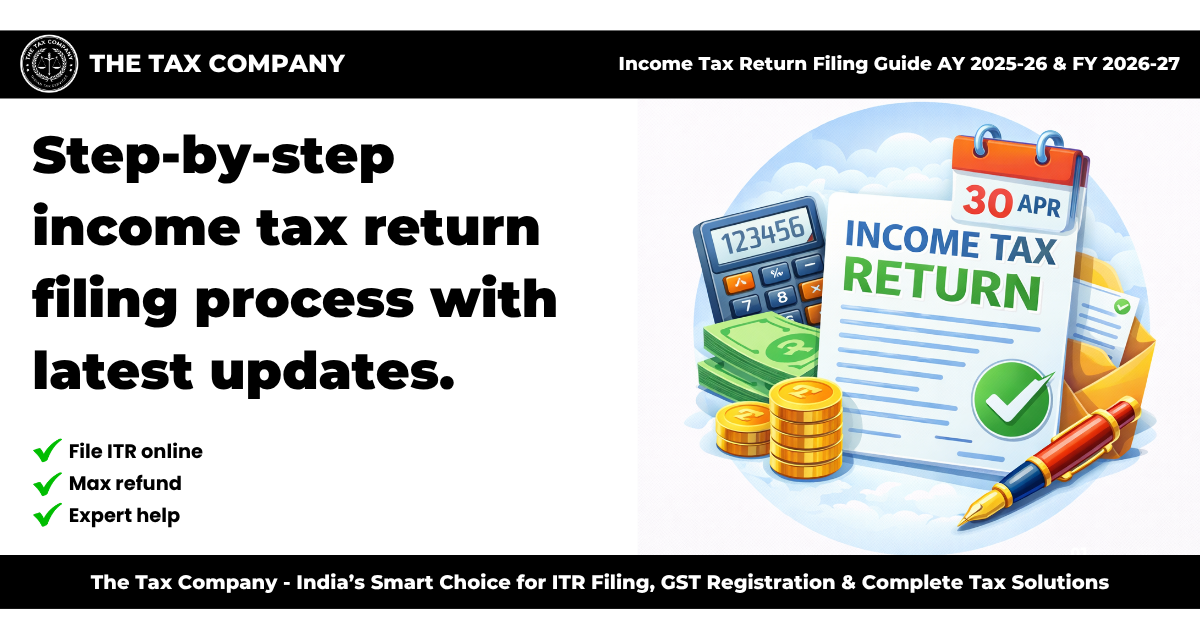
Filing Income Tax Returns (ITR) is an essential responsibility for every taxpayer. It ensures compliance with tax laws, helps in financial record-keeping, and enables access to various financial benefits such as loans and refunds.
For the financial year relevant to 2026, taxpayers must understand the filing process, eligibility, and important deadlines to avoid penalties and ensure smooth compliance.
This guide provides a complete overview of income tax filing in India.
What is Income Tax Filing?
Income Tax Filing is the process of reporting your income, expenses, deductions, and taxes paid to the Income Tax Department through a prescribed return form.
It helps determine whether you have paid the correct amount of tax or are eligible for a refund.
Who Should File Income Tax Return?
You should file an ITR if:
- Your total income exceeds the basic exemption limit
- You want to claim a tax refund
- You have foreign income or assets
- You are required to carry forward losses
- You have high-value financial transactions
- You are a company or firm (mandatory filing)
Types of ITR Forms
- ITR-1: For salaried individuals with simple income
- ITR-2: For individuals with capital gains or multiple properties
- ITR-3: For business or professional income
- ITR-4: For presumptive taxation scheme
Documents Required for Income Tax Filing
- PAN and Aadhaar
- Form 16 (for salaried individuals)
- Bank statements
- Form 26AS, AIS, and TIS
- Investment proofs for deductions
- Capital gains statements (if applicable)
- Business financial statements (if applicable)
Due Dates for Filing ITR 2026
- 31st July 2026: For individuals (non-audit cases)
- 31st October 2026: For audit cases
Dates may change as per government notification.
Step-by-Step Process to File ITR
Step 1: Collect Documents
- Gather all income and tax-related documents
Step 2: Choose Correct ITR Form
- Select appropriate form based on income
Step 3: Login to Income Tax Portal
- Access official e-filing website
Step 4: Enter Income Details
- Report all income sources accurately
Step 5: Claim Deductions
- Claim eligible deductions under Chapter VI-A
Step 6: Compute Tax Liability
- Verify tax calculation and pay dues
Step 7: Submit and Verify Return
- Verify using Aadhaar OTP, net banking, or EVC
Common Deductions Available
- Section 80C: Investments (PF, LIC, ELSS, etc.)
- Section 80D: Health insurance
- Section 80E: Education loan interest
- Section 80G: Donations
- Section 24: Home loan interest
Benefits of Filing Income Tax Return
- Legal compliance
- Easy loan and visa processing
- Claim tax refunds
- Carry forward losses
- Financial record maintenance
Common Mistakes to Avoid
- Selecting wrong ITR form
- Not reporting all income
- Ignoring AIS or Form 26AS
- Missing deductions
- Not verifying return
Penalties for Late Filing
- Late filing fee up to Rs. 5,000 under Section 234F
- Interest on unpaid tax
- Loss of certain benefits like loss carry forward
Tips for Smooth Filing
- File return early
- Keep documents organized
- Reconcile all income details
- Verify return immediately
- Seek professional help if required
Role of Professional Assistance
Professional assistance can help:
- Select correct ITR form
- Ensure accurate filing
- Maximize deductions
- Avoid notices and penalties
Conclusion
Income Tax Filing is a crucial aspect of financial compliance and planning. Timely and accurate filing helps avoid penalties and ensures smooth financial operations.
For 2026, taxpayers should stay informed, maintain proper records, and file returns within due dates.
Need Help with Income Tax Filing?
The Tax Company (TTC) provides expert assistance in income tax filing. Our team ensures accurate filing, maximum deductions, and hassle-free compliance.
Contact us today for professional support.