Revised Income Tax Return Guide AY 2025-26 & FY 2026-27
Introduction
Filing an accurate Income Tax Return (ITR) is essential for maintaining compliance with tax laws. However, errors such as incorrect income reporting, missed deductions, or wrong personal details can occur.
To correct such mistakes, the Income Tax Act provides an option to file a Revised Income Tax Return.
For Assessment Year (AY) 2025-26 and Financial Year (FY) 2026-27, understanding the process, eligibility, and timelines for revising your return is crucial to avoid penalties and ensure accurate reporting.
What is a Revised Income Tax Return?
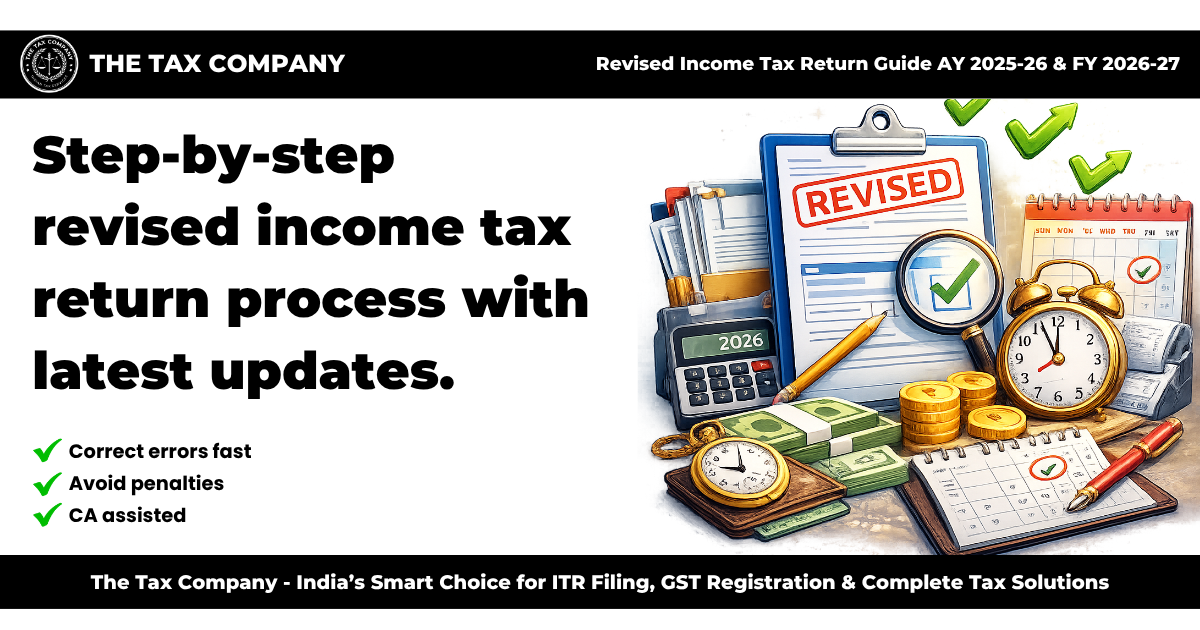
A Revised Return is a corrected version of an already filed Income Tax Return. It is filed under Section 139(5) of the Income Tax Act.
It allows taxpayers to rectify errors, omissions, or incorrect information in their original or belated return.
Who Can File a Revised Return?
You can file a revised return if:
- You have already filed your original return (within due date or belated)
- You identify errors or omissions in the filed return
- You want to correct income, deductions, or personal details
Time Limit for Filing Revised Return
For AY 2025-26:
- A revised return can be filed up to 31st December 2025
- Or before completion of assessment, whichever is earlier
Note: Timelines may change as per government updates.
Reasons for Filing a Revised Return
Common reasons include:
- Incorrect reporting of income
- Omission of income such as interest, rental, or freelance income
- Wrong selection of ITR form
- Errors in deductions or exemptions claimed
- Incorrect bank or personal details
- Mismatch with Form 26AS, AIS, or TIS
Can You Revise a Belated Return?
Yes, a belated return filed under Section 139(4) can also be revised under Section 139(5) within the prescribed time limit.
Step-by-Step Process to File Revised Return
Step 1: Login to Income Tax Portal
- Access the official e-filing portal
Step 2: Select ‘File Income Tax Return’
- Choose Assessment Year 2025-26
Step 3: Choose ‘Revised Return’ Option
- Select return filing under Section 139(5)
Step 4: Enter Original Return Details
- Provide acknowledgment number and filing date
Step 5: Make Necessary Corrections
- Update income, deductions, or personal details
Step 6: Recalculate Tax Liability
- Pay additional tax with interest if applicable
Step 7: Submit and Verify Return
- Submit and verify using Aadhaar OTP, net banking, or EVC
Important Points to Remember
- A revised return can be filed multiple times within the allowed period
- The latest revised return replaces the previous one
- Verification is mandatory for completion
- Keep acknowledgment details for reference
Common Mistakes to Avoid
- Entering incorrect original return details
- Not reporting all income sources
- Not paying additional tax before submission
- Not verifying the revised return
- Delaying corrections
Consequences of Not Revising Errors
Failure to correct errors may result in:
- Notices from the Income Tax Department
- Additional tax demand with interest
- Penalties for underreporting income
- Increased chances of scrutiny
Benefits of Filing a Revised Return
- Corrects errors and omissions
- Ensures accurate compliance
- Reduces risk of penalties and notices
- Maintains clean financial records
Role of Professional Assistance
Professional assistance can help:
- Identify errors in the original return
- Ensure accurate corrections
- Handle tax calculations
- Avoid legal complications
Conclusion
Filing a Revised Income Tax Return is an important facility that allows taxpayers to correct mistakes and ensure accurate reporting. For AY 2025-26 and FY 2026-27, timely revision helps avoid penalties and maintain compliance.
Taking prompt action ensures smooth tax management and peace of mind.
Need Help Filing a Revised Return?
The Tax Company (TTC) provides expert assistance in reviewing and revising your income tax returns. Our team ensures accurate corrections and hassle-free filing.
Contact us today for professional support.